How Dispatchers Help Trucking Companies Grow Faster
The trucking industry is the backbone of the economy, moving goods across cities, states, and countries every day. However, running a successful trucking business involves much more than driving from one destination to another. Finding profitable loads, negotiating rates, managing paperwork, planning routes, and maintaining strong relationships with brokers can quickly become overwhelming for owner-operators and fleet owners.
This is where professional dispatchers play a critical role.
A skilled truck dispatcher does far more than book loads. They act as a business partner, helping trucking companies maximize revenue, reduce downtime, improve efficiency, and scale their operations. In today’s competitive freight market, having an experienced dispatcher can be the difference between struggling to stay profitable and building a thriving trucking business.
What Does a Truck Dispatcher Do?
A truck dispatcher is responsible for managing the day-to-day logistics of freight operations. Their primary goal is to keep trucks loaded, moving, and generating revenue.
Typical dispatcher responsibilities include:
- Finding and booking profitable loads
- Negotiating freight rates with brokers
- Planning efficient routes
- Managing paperwork and documentation
- Communicating with brokers and shippers
- Tracking loads and delivery schedules
- Reducing deadhead miles
- Supporting drivers with operational issues
By handling these responsibilities, dispatchers allow drivers and fleet owners to focus on what they do best, delivering freight safely and efficiently.
How Dispatchers Increase Revenue
One of the biggest benefits of working with a dispatcher is increased earning potential.
Many owner-operators spend hours each day searching load boards, calling brokers, and comparing rates. This is valuable time that could be spent driving and generating income.
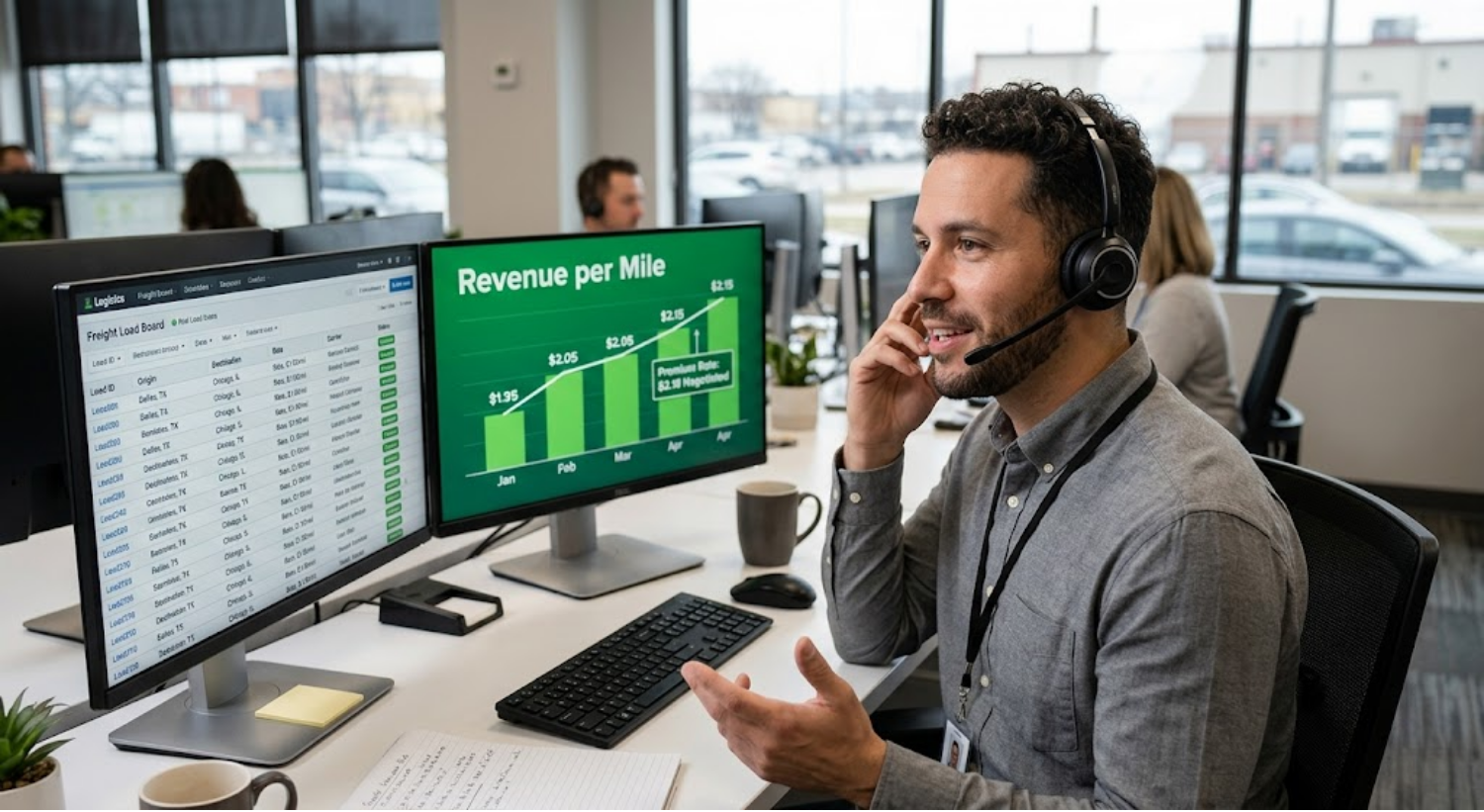
Experienced dispatchers understand market conditions and know where to find high-paying freight. They also have the negotiation skills needed to secure better rates.
Real Example
Consider an owner-operator running independently who averages $2.10 per mile. After partnering with a dispatcher who specializes in freight negotiation and lane optimization, the driver begins securing loads averaging $2.45 per mile.
For a truck running 10,000 miles per month, that additional $0.35 per mile translates into approximately $3,500 in additional monthly revenue.
Over a year, that’s more than $40,000 in extra income simply from better load selection and negotiation.
Reducing Deadhead Miles
Deadhead miles are one of the biggest profit killers in trucking.
Every mile driven without freight increases fuel costs, vehicle wear, and operating expenses while generating no revenue.
Professional dispatchers continuously search for backhaul opportunities and strategic load combinations to minimize empty miles.
Real Example
A driver delivers a load from Dallas to Atlanta. Without proper planning, the truck may travel hundreds of empty miles before securing another load.
A dispatcher can often arrange a return load before the initial delivery is completed, allowing the driver to stay productive and profitable.
Reducing deadhead mileage by even 10% can significantly improve overall profit margins.
Better Route Planning
Route planning involves much more than choosing the shortest path.
Dispatchers consider factors such as:
- Fuel costs
- Traffic patterns
- Weather conditions
- Delivery schedules
- Driver Hours of Service regulations
- Road restrictions
By optimizing routes, dispatchers help reduce fuel consumption and improve delivery performance.
Real Example
A fleet operating 20 trucks saves just $20 per day per truck through better route planning.
That equals:
- $400 per day
- $12,000 per month
- $144,000 per year
Small improvements can generate substantial long-term savings.
Handling Broker Communications
Many truck drivers prefer spending time on the road rather than negotiating rates or dealing with broker calls.
Dispatchers serve as the primary point of contact between carriers and brokers.
This includes:
- Negotiating rates
- Resolving issues
- Scheduling pickups and deliveries
- Managing detention requests
- Handling paperwork requirements
Strong dispatcher-broker relationships often lead to repeat freight opportunities and better-paying loads.
Managing Paperwork Efficiently
Administrative tasks consume valuable time.
Dispatchers help manage:
- Rate confirmations
- Carrier packets
- Load documentation
- Invoices
- Proof of delivery submissions
- Broker compliance requirements
By ensuring paperwork is accurate and submitted on time, dispatchers help carriers avoid payment delays and operational disruptions.
Supporting Business Growth
As trucking companies grow, operational complexity increases. Managing one truck is very different from managing five, ten, or twenty trucks.
Dispatchers provide the structure needed to scale efficiently.
They help:
- Coordinate multiple drivers
- Schedule loads effectively
- Monitor fleet performance
- Improve communication
- Maintain customer relationships
Without proper dispatch support, growth can quickly lead to inefficiencies and lost revenue opportunities.
Real Example
Many successful small fleets begin with one truck and expand over time.
One common growth pattern involves an owner-operator partnering with a dispatcher to improve load management. Increased profits allow the business to purchase additional trucks and hire drivers.
As operations expand, dispatch support becomes even more valuable, helping manage the increased workload while maintaining profitability.
Improving Driver Productivity
Drivers earn money when their trucks are moving.
When drivers spend hours searching for loads, negotiating rates, or completing paperwork, productivity decreases.
Dispatchers remove these distractions and allow drivers to focus on driving.
This leads to:
- More miles driven
- Better utilization
- Higher revenue
- Less stress
- Improved work-life balance
A productive driver is often a more profitable driver.
Staying Competitive in a Challenging Market
Freight markets can change rapidly.
Rates fluctuate, fuel prices rise, and capacity shifts across regions.
Professional dispatchers monitor market trends daily and adjust strategies accordingly.
This market knowledge helps carriers:
- Identify profitable lanes
- Avoid weak markets
- Secure consistent freight
- Adapt to changing conditions
Companies that make informed decisions typically outperform those operating without market insight.
Why More Trucking Companies Are Using Dispatch Services
The trucking industry has become increasingly competitive. Many owner-operators and small fleets recognize that professional dispatching is not an expense—it’s an investment.
A quality dispatcher helps trucking businesses:
- Increase revenue
- Reduce deadhead miles
- Improve efficiency
- Secure better-paying freight
- Handle paperwork
- Strengthen broker relationships
- Scale operations faster
These advantages create a stronger, more sustainable business model.
Final Thoughts
Success in trucking depends on more than simply finding loads. It requires strategic planning, strong industry relationships, efficient operations, and consistent execution.
Professional dispatchers help trucking companies achieve these goals by managing the operational side of the business while drivers focus on the road.
Whether you’re an owner-operator looking to maximize profits or a growing fleet aiming to scale operations, partnering with an experienced dispatcher can accelerate growth, improve efficiency, and create new opportunities for long-term success. At Truckings Pro, we help carriers find profitable loads, negotiate competitive rates, reduce downtime, and keep trucks moving. Our dedicated dispatch team works to ensure that every mile contributes to your success.