How Dispatch Services Save Time and Fuel Costs for Trucking Companies
In today’s highly competitive trucking industry, profitability depends on more than simply moving freight from one location to another. Rising fuel prices, increasing operational expenses, and tight delivery schedules make efficiency more important than ever. For owner-operators and fleet owners, every mile and every minute matter.
One of the most effective ways to improve operational efficiency is by partnering with a professional truck dispatch service. Beyond finding loads, experienced dispatchers help trucking businesses save valuable time, reduce fuel expenses, and maximize overall profitability.
In this article, we’ll explore how dispatch services help trucking companies operate more efficiently while keeping costs under control.
Why Time and Fuel Costs Matter in Trucking
Fuel is one of the largest operating expenses for trucking businesses, often accounting for a significant portion of total costs. At the same time, wasted hours spent searching for loads, negotiating rates, and planning routes can reduce productivity and limit earning potential.
Common challenges truckers face include:
- Excessive deadhead miles
- Poor route planning
- Delays between loads
- Time-consuming paperwork
- Inefficient scheduling
- Difficulty finding profitable freight
These challenges can quickly reduce profit margins and make business growth more difficult.
What Does a Truck Dispatch Service Do?
A truck dispatch service acts as a logistics partner for carriers and owner-operators. Their primary responsibility is to keep trucks moving efficiently by coordinating freight opportunities and managing daily operations.
Dispatch services typically handle:
- Load sourcing
- Rate negotiation
- Route planning
- Broker communication
- Scheduling
- Documentation management
- Freight tracking
This allows drivers to focus on driving and delivering loads rather than spending hours managing logistics.
Reducing Deadhead Miles
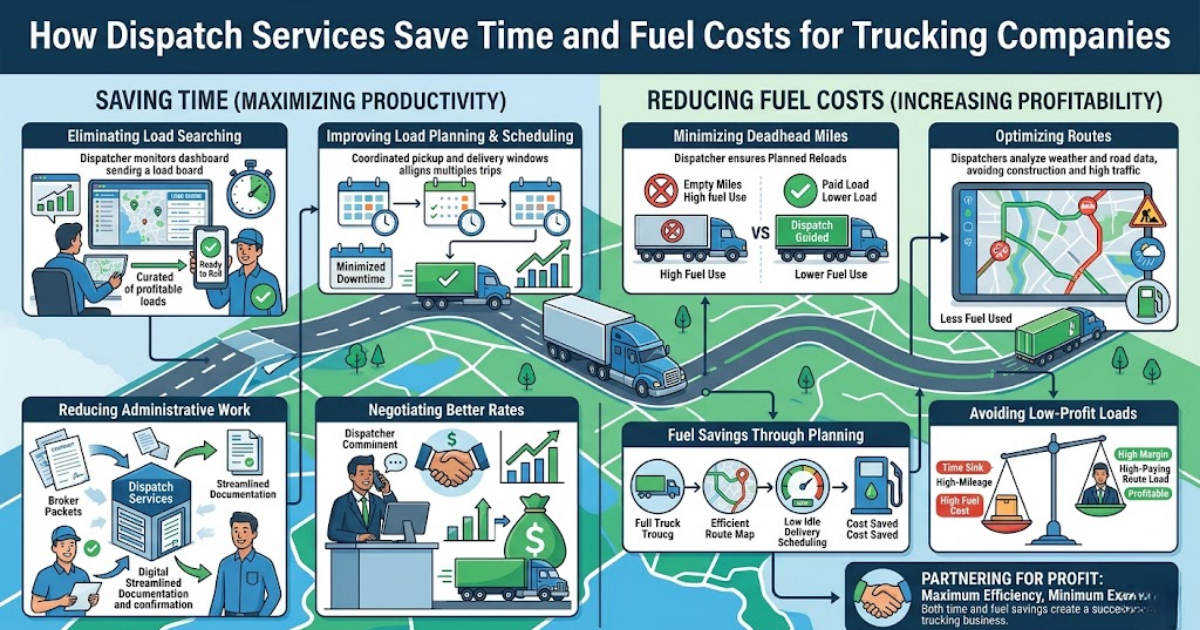
One of the biggest ways dispatch services save fuel costs is by minimizing deadhead miles.
Deadhead miles occur when a truck travels without a paying load. These empty miles consume fuel, increase vehicle wear and tear, and generate no revenue.
Professional dispatchers continuously monitor freight opportunities and plan reloads before deliveries are completed. This helps ensure trucks spend less time driving empty and more time hauling profitable freight.
Benefits of reduced deadhead include:
- Lower fuel consumption
- Increased revenue per mile
- Reduced maintenance costs
- Better equipment utilization
Even a small reduction in deadhead miles can significantly improve profitability over time.
Optimizing Routes for Maximum Efficiency
Route planning is about more than choosing the shortest path.
Experienced dispatchers evaluate:
- Traffic patterns
- Construction zones
- Weather conditions
- Fuel availability
- Delivery schedules
- State regulations
By identifying the most efficient routes, dispatchers help drivers avoid unnecessary detours and delays.
Efficient routing leads to:
- Reduced fuel usage
- Faster deliveries
- Improved customer satisfaction
- Increased driving productivity
The result is more completed loads and higher earnings.
Eliminating Time Spent Searching for Loads
Many owner-operators spend hours each day browsing load boards and contacting brokers.
This time could be spent driving, resting, or managing other aspects of the business.
Dispatch services handle the load search process by:
- Monitoring load boards
- Contacting brokers
- Comparing available freight
- Negotiating rates
- Securing the best opportunities
Drivers receive ready-to-haul loads without spending valuable hours searching for freight.
Negotiating Better Freight Rates
Experienced dispatchers understand market conditions and freight pricing trends.
They know:
- Which lanes pay the highest rates
- When demand is strongest
- How to negotiate with brokers
- Which loads offer the best profit margins
Higher-paying loads often mean fewer trips are needed to achieve revenue goals, reducing fuel consumption and overall operating costs.
Strong rate negotiation directly impacts profitability and helps trucking companies maximize revenue.
Improving Load Planning and Scheduling
Poor scheduling can lead to long wait times, missed opportunities, and unnecessary fuel expenses.
Dispatchers coordinate:
- Pickup appointments
- Delivery windows
- Reload opportunities
- Driver availability
Proper scheduling helps eliminate downtime and keeps trucks moving efficiently.
Benefits include:
- Increased productivity
- Reduced idle time
- Lower fuel waste
- Better customer service
Reducing Administrative Work
Administrative tasks consume valuable time that could be spent generating revenue.
Truck dispatch services often manage:
- Broker packets
- Rate confirmations
- Appointment scheduling
- Documentation tracking
- Communication with customers and brokers
By handling these responsibilities, dispatchers free drivers to focus on their core operations.
Helping Drivers Avoid Low-Profit Loads
Not every load is worth accepting.
Some loads may involve:
- Long deadhead distances
- Low rates
- Congested routes
- Excessive wait times
Professional dispatchers analyze load profitability before booking freight. Their goal is to secure loads that generate strong returns while minimizing operational expenses.
This strategic approach helps trucking businesses avoid costly mistakes and maintain healthier profit margins.
Fuel Savings Through Better Operational Planning
Fuel costs are influenced by more than mileage alone.
Dispatchers help reduce fuel expenses by:
- Minimizing empty miles
- Avoiding traffic-heavy routes
- Reducing idle time
- Planning efficient delivery schedules
- Selecting profitable freight lanes
Together, these improvements can result in substantial fuel savings throughout the year.
Why More Owner-Operators Are Using Dispatch Services
As freight markets become increasingly competitive, many owner-operators are turning to dispatch services to improve efficiency and profitability.
Instead of spending hours handling logistics, drivers can focus on:
- Delivering loads safely
- Maximizing driving hours
- Maintaining equipment
- Growing their business
A professional dispatcher becomes an extension of the trucking operation, helping carriers make smarter decisions every day.
How Truckings Pro Helps Truckers Save Time and Fuel
At Truckings Pro, we understand that every mile counts.
Our dispatch team works closely with owner-operators and fleet owners to:
- Find high-paying loads
- Minimize deadhead miles
- Plan efficient routes
- Negotiate competitive rates
- Manage broker communications
- Keep trucks moving consistently
Our goal is to help carriers maximize revenue while reducing unnecessary operating costs.
Final Thoughts
Time and fuel are two of the most valuable resources in the trucking industry. Wasting either can significantly impact profitability and long-term business success.
Professional dispatch services provide much more than load booking. They help trucking companies optimize routes, reduce deadhead miles, improve scheduling, negotiate better rates, and eliminate time-consuming administrative tasks.
For owner-operators and fleet owners looking to increase efficiency and lower operating expenses, partnering with an experienced dispatch service can be a smart investment that delivers measurable results.