How AI Is Changing Truck Dispatching: The Future of Freight Management
The trucking industry is experiencing a technological transformation unlike anything seen before. Artificial Intelligence (AI) is reshaping how freight is managed, routes are planned, loads are booked, and trucking operations are optimized. What once required hours of manual work can now be completed in minutes through intelligent automation and data-driven decision-making.
For truck dispatchers, owner-operators, and fleet managers, AI is no longer a futuristic concept; it’s becoming an essential tool for improving efficiency, reducing costs, and increasing profitability.
In this article, we’ll explore how AI is changing truck dispatching, the benefits it offers, and why businesses that embrace this technology are gaining a competitive advantage.
What Is AI in Truck Dispatching?
Artificial Intelligence refers to computer systems that can analyze data, identify patterns, make predictions, and automate tasks that traditionally required human decision-making.
In truck dispatching, AI helps streamline operations by processing massive amounts of information in real time, including:
- Freight market trends
- Traffic conditions
- Fuel prices
- Weather forecasts
- Driver availability
- Route performance
- Load demand and supply
By analyzing this data instantly, AI helps dispatchers make smarter and faster decisions.
The Traditional Dispatching Process
For years, dispatchers relied heavily on manual processes such as:
- Searching load boards
- Contacting brokers
- Comparing freight rates
- Planning routes
- Tracking shipments
- Managing paperwork
While effective, these tasks often consume significant time and leave room for human error.
As freight volumes increase and customer expectations grow, manual dispatching methods are becoming less efficient.
This is where AI is making a major impact.
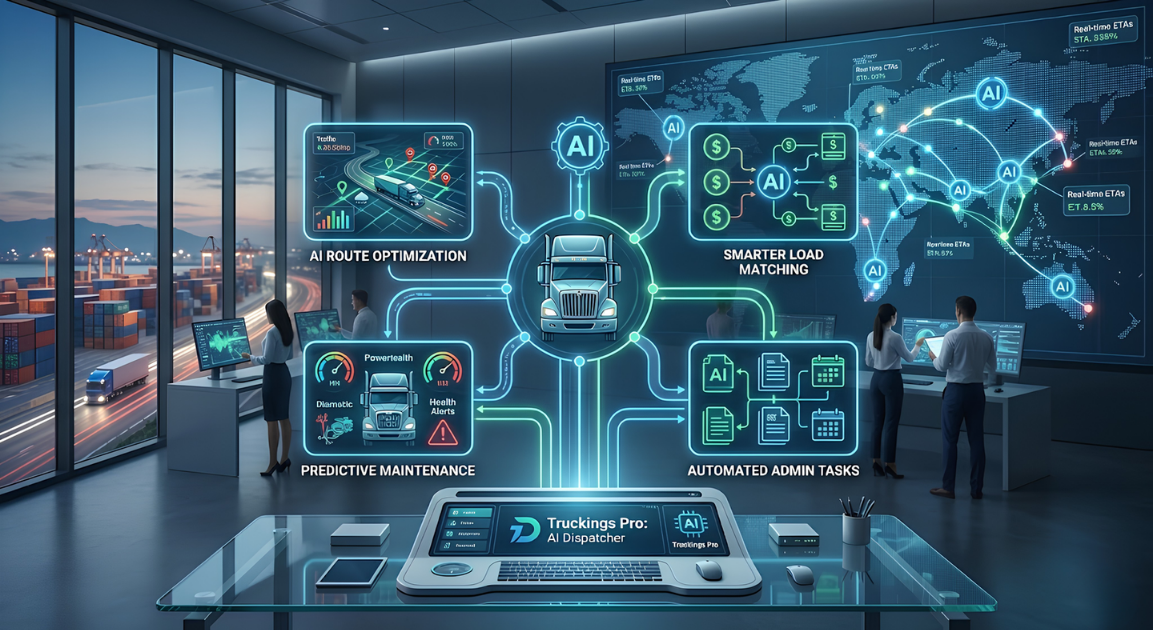
AI-Powered Route Optimization
One of the most significant applications of AI in trucking is route optimization.
Traditional route planning often focuses on distance alone. AI goes much further by analyzing:
- Real-time traffic data
- Road closures
- Construction zones
- Weather conditions
- Fuel stops
- Delivery schedules
AI-powered routing systems can recommend the most efficient routes, helping carriers:
- Reduce fuel consumption
- Avoid delays
- Improve delivery times
- Increase daily productivity
For trucking businesses, even small improvements in route efficiency can lead to substantial cost savings.
Smarter Load Matching
Finding profitable loads is one of the most important responsibilities of a dispatcher.
AI is revolutionizing this process by matching available trucks with the most suitable freight opportunities.
Instead of manually searching load boards, AI systems can evaluate:
- Current truck location
- Equipment type
- Driver hours
- Destination preferences
- Freight rates
- Delivery requirements
This allows dispatchers to identify high-quality loads faster and reduce the time trucks spend sitting idle.
Predicting Freight Market Trends
Freight rates constantly fluctuate based on supply and demand.
AI systems can analyze historical and real-time market data to identify patterns and predict future trends.
This helps dispatchers:
- Understand market conditions
- Anticipate rate changes
- Position trucks strategically
- Negotiate better rates
By using predictive analytics, trucking companies can make more informed business decisions and maximize revenue opportunities.
Reducing Deadhead Miles
Deadhead miles remain one of the biggest challenges in trucking profitability.
AI helps reduce empty miles by:
- Identifying nearby freight opportunities
- Predicting future load availability
- Suggesting profitable backhaul routes
- Matching loads based on truck location
The result is increased revenue per mile and lower fuel expenses.
Real-Time Shipment Tracking
Customers increasingly expect visibility into their shipments.
AI-powered tracking systems provide real-time updates on:
- Truck locations
- Estimated arrival times
- Route changes
- Delivery status
This improves communication between carriers, brokers, and customers while reducing the need for constant manual updates.
Automated Administrative Tasks
Administrative work often consumes valuable dispatcher time.
AI can automate routine tasks such as:
- Data entry
- Appointment scheduling
- Load documentation
- Status updates
- Invoice processing
- Email communication
By reducing repetitive work, dispatchers can focus on higher-value activities like customer service and freight planning.
Improved Fuel Efficiency
Fuel remains one of the largest operating expenses for trucking companies.
AI helps reduce fuel costs through:
- Intelligent route planning
- Traffic avoidance
- Reduced idle time
- Predictive maintenance alerts
- Driver performance analysis
These improvements contribute to significant operational savings over time.
AI and Predictive Maintenance
Unexpected breakdowns can be expensive and disruptive.
AI-powered maintenance systems analyze vehicle data to identify potential issues before they become serious problems.
These systems monitor:
- Engine performance
- Tire conditions
- Fuel efficiency
- Brake systems
- Maintenance schedules
Predictive maintenance helps reduce downtime, avoid costly repairs, and improve fleet reliability.
Enhanced Driver Performance Monitoring
AI can also support safer and more efficient driving practices.
Modern telematics systems use AI to monitor:
- Speed patterns
- Braking behavior
- Fuel usage
- Idling time
- Route efficiency
This data helps fleet managers provide coaching and improve overall operational performance.
Will AI Replace Truck Dispatchers?
One of the most common concerns surrounding AI is whether it will replace human dispatchers.
The answer is no.
While AI can automate repetitive tasks and provide valuable insights, human expertise remains essential for:
- Building broker relationships
- Negotiating freight rates
- Handling unexpected situations
- Managing customer relationships
- Making strategic decisions
Rather than replacing dispatchers, AI serves as a powerful tool that enhances their capabilities and improves productivity.
The future of dispatching is likely to combine AI-driven technology with experienced human decision-making.
Challenges of AI Adoption in Trucking
Despite its benefits, implementing AI comes with challenges.
These may include:
- Initial technology costs
- Staff training requirements
- Data integration issues
- Resistance to change
- Cybersecurity concerns
However, as AI solutions become more affordable and accessible, adoption across the trucking industry continues to grow.
How Truckings Pro Uses Technology to Improve Dispatching
At Truckings Pro, we recognize the growing role of technology in modern freight management.
By combining industry expertise with advanced dispatching tools, we help owner-operators and fleet owners:
- Find high-paying loads
- Optimize routes
- Reduce deadhead miles
- Improve operational efficiency
- Stay competitive in a changing market
Our goal is to leverage the best available technology while maintaining the personal service and industry knowledge that drivers rely on.
The Future of AI in Truck Dispatching
As AI technology continues to evolve, its role in trucking will become even more significant.
Future developments may include:
- Advanced freight forecasting
- Autonomous dispatch assistance
- Real-time market pricing recommendations
- Enhanced fleet automation
- More accurate predictive analytics
Companies that embrace these innovations will be better positioned to improve efficiency, reduce costs, and increase profitability.
Final Thoughts
Artificial Intelligence is transforming truck dispatching by making operations smarter, faster, and more efficient. From route optimization and load matching to predictive maintenance and freight forecasting, AI is helping trucking businesses save time, reduce costs, and maximize revenue.
While technology continues to evolve, successful dispatching will always require a combination of intelligent tools and human expertise. Businesses that leverage both will be best equipped to thrive in the future of freight transportation.
For trucking companies and owner-operators looking to stay competitive, now is the time to understand and embrace the opportunities that AI brings to the industry.