The Hidden Challenges of Running a Trucking Business Alone
Starting an owner-operator business often begins with a simple goal: independence.
Many drivers enter the trucking industry dreaming of being their own boss, choosing their own loads, setting their own schedules, and building a business on their own terms. The appeal is understandable. Owning your truck and controlling your future offers a level of freedom that many company drivers aspire to achieve.
However, what many new owner-operators quickly discover is that running a trucking business involves much more than driving.
The truck may be your most visible asset, but behind every successful operation is a long list of responsibilities that extend far beyond the driver’s seat. Finding freight, negotiating rates, managing paperwork, planning routes, maintaining broker relationships, scheduling appointments, and handling administrative tasks all become part of the job.
The challenge isn’t simply hauling freight. It’s managing an entire business while still spending long hours on the road.
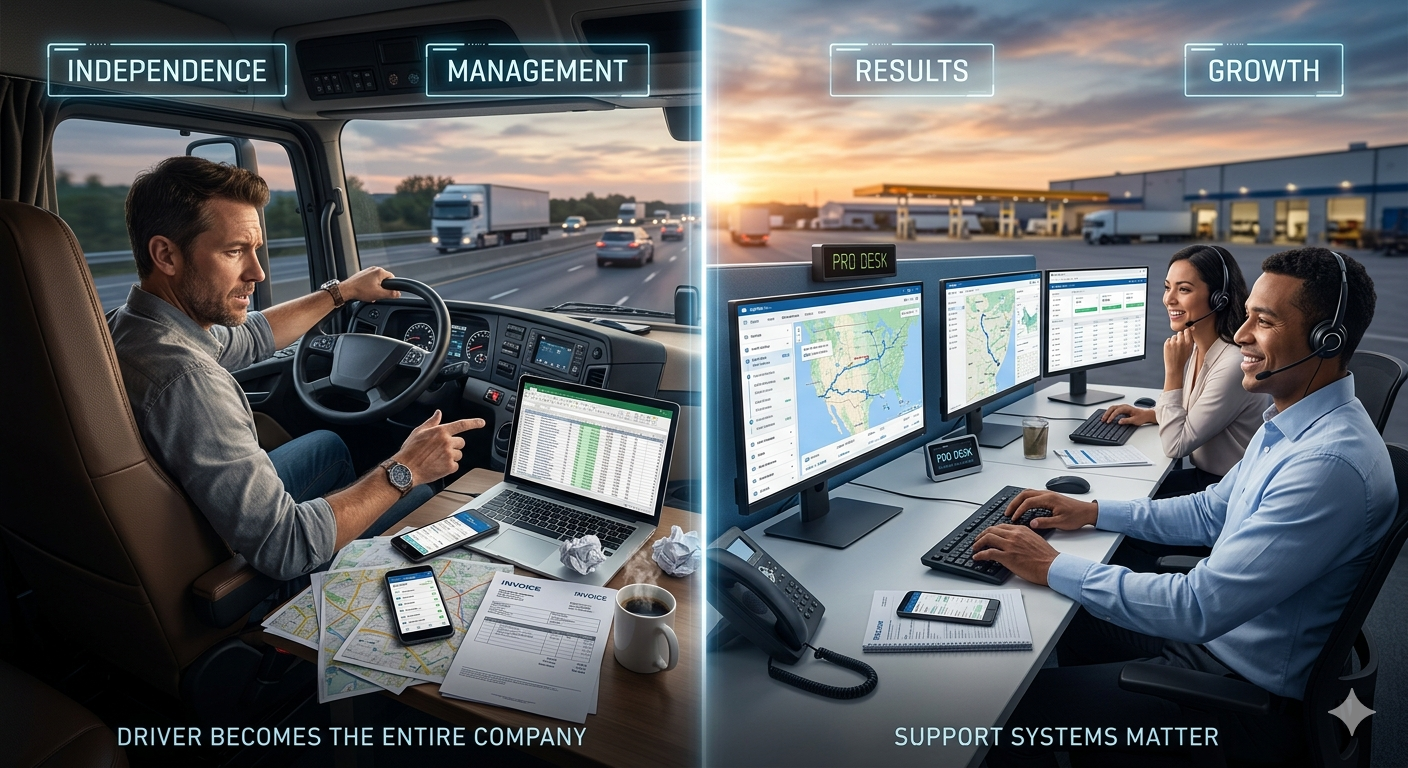
The Driver Becomes the Entire Company
When trucking companies grow, responsibilities are divided among multiple people.
Dispatchers find loads and coordinate schedules. Accountants manage finances. Operations managers monitor performance. Customer service teams handle communication. Safety departments ensure compliance.
For owner-operators, all of these responsibilities often fall on one person.
That person is usually the driver.
While driving remains the primary source of revenue, a significant portion of each day may be spent managing tasks that have little to do with transportation itself. Over time, this creates a workload that can become difficult to sustain.
Many owner-operators discover that running a trucking business requires two full-time jobs: driving the truck and managing the business behind it.
The Pressure of Constant Decision-Making
One of the least discussed challenges of operating independently is decision fatigue.
Every day requires dozens of business decisions.
Questions such as:
- Which load should I accept?
- Is this lane worth running?
- Should I wait for a better-paying load?
- Will there be freight available at the destination?
- Is this broker reliable?
- Should maintenance be performed now or later?
may seem minor individually. However, when combined over weeks and months, they create constant mental pressure.
Unlike company drivers who can rely on support teams, owner-operators must make these decisions independently while simultaneously managing deliveries, schedules, and customer expectations.
The result is often stress, uncertainty, and burnout.
Time Becomes Your Most Limited Resource
Most owner-operators enter the business because they enjoy driving.
Ironically, running a trucking company often reduces the amount of time available to focus on driving.
Hours can disappear every week while:
- Searching load boards
- Negotiating rates
- Completing paperwork
- Scheduling appointments
- Tracking invoices
- Communicating with brokers
- Resolving operational issues
None of these activities directly move freight, yet all of them are necessary to keep the business functioning.
The challenge is that time spent managing operations is time not spent generating revenue.
As the business grows, balancing these responsibilities becomes increasingly difficult.
Finding Consistent Freight Is More Difficult Than It Appears
Many new owner-operators assume that finding loads is the easiest part of the business.
After all, load boards are filled with freight opportunities every day.
What often goes unnoticed is that successful trucking businesses aren’t built on finding occasional loads. They’re built on finding consistent freight opportunities that align with long-term business goals.
This requires understanding:
- Market trends
- Freight lanes
- Seasonal demand
- Broker relationships
- Reload opportunities
Without this knowledge, owner-operators may find themselves constantly reacting to the market rather than strategically positioning themselves for success.
The difference between staying busy and building a sustainable business often comes down to planning.
Managing Broker Relationships Takes Time
Many owner-operators focus on securing the next load without realizing the long-term value of strong broker relationships.
Reliable brokers often prefer working with carriers they know and trust. Building these relationships requires consistent communication, professionalism, and reliability over time.
For drivers already balancing multiple responsibilities, maintaining broker relationships can be challenging.
As a result, many owner-operators become heavily dependent on public load boards, where competition is higher and opportunities are often less predictable.
Developing strong industry relationships is one of the most valuable yet time-consuming aspects of running a trucking business.
Administrative Work Never Stops
Driving may end when the truck is parked, but business operations continue.
Administrative responsibilities often include:
- Rate confirmations
- Compliance documents
- Invoices
- Broker packets
- Expense tracking
- Tax preparation
- Appointment scheduling
These tasks are rarely discussed when people talk about becoming an owner-operator, yet they consume a considerable amount of time throughout the year.
Many drivers underestimate the cumulative impact of administrative work until they are responsible for handling it themselves.
The Challenge of Planning Ahead
One of the biggest differences between successful trucking businesses and struggling ones is their ability to think ahead.
Many owner-operators become trapped in a cycle of focusing only on the next load, the next delivery, or the next payment.
However, long-term success often depends on planning several steps ahead.
Questions such as:
- Where will the truck be next week?
- Which lanes offer stronger opportunities?
- How can downtime be minimized?
- What markets are expected to improve?
require strategic thinking that can be difficult when daily operations consume most of a driver’s attention.
Without adequate planning, businesses often become reactive rather than proactive.
Burnout Is More Common Than Many Realize
Running a trucking business alone can be rewarding, but it can also be exhausting.
The pressure of managing operations, finances, customers, brokers, compliance requirements, and equipment maintenance creates a workload that few people fully appreciate until they experience it firsthand.
Many owner-operators spend years working long hours without taking sufficient time to step back and evaluate the overall direction of their business.
Over time, this constant pressure can affect decision-making, productivity, and overall job satisfaction.
Burnout is not always caused by driving itself. Often, it stems from carrying the weight of every business responsibility alone.
Why Support Systems Matter
Successful owner-operators understand that independence does not mean doing everything alone.
The most efficient businesses often rely on trusted partners and support systems to handle specialized responsibilities.
This may include:
- Dispatch services
- Accountants
- Compliance specialists
- Maintenance providers
- Industry advisors
Delegating certain tasks allows owner-operators to focus on their strengths while improving operational efficiency.
The goal is not to give up control. The goal is to free up time and mental energy for higher-value activities.
How Truckings Pro Helps Owner-Operators Focus on Driving
At Truckings Pro, we understand the challenges that come with running a trucking business independently.
Our dispatch team helps owner-operators simplify daily operations by assisting with:
- Load sourcing
- Rate negotiation
- Route planning
- Appointment scheduling
- Broker communication
- Freight coordination
By reducing administrative burdens and helping carriers stay loaded, we allow drivers to spend more time focusing on what they do best—delivering freight and growing their business.
Final Thoughts
Owning a trucking business offers freedom, flexibility, and significant growth potential. However, it also comes with responsibilities that many drivers underestimate.
The challenge isn’t simply operating a truck. It’s managing every aspect of a business while simultaneously spending long hours on the road.
From decision-making and freight planning to paperwork and broker communication, the demands of running a trucking business alone can quickly become overwhelming.
The most successful owner-operators recognize that growth doesn’t come from doing everything themselves. It comes from building systems, relationships, and support networks that allow the business to operate more efficiently.
Because in trucking, independence doesn’t mean carrying every burden alone. It means having the freedom to focus on what matters most.